

Finishing cancer treatment is a major milestone, but many patients feel unsure after the last chemotherapy cycle, surgery review, or radiation session. Families ask, "Now what?" I explain that follow-up is an active part of care. It helps us monitor recovery, manage late side effects, check for warning signs, and support return to daily life.
Why follow-up visits are important
Follow-up schedules depend on cancer type, stage, treatment received, symptoms, and risk of recurrence. The doctor may advise examination, blood tests, imaging, rehabilitation review, medicine review, or screening for treatment-related effects.
Skipping follow-up because the patient feels well can create unnecessary risk. Many issues are easier to manage when identified early.
What recovery may look like
Recovery is not always immediate. Fatigue, appetite changes, stiffness, numbness, skin changes, swallowing difficulty, bowel or urinary changes, mood changes, sleep disturbance, or fear of recurrence can continue for some time.
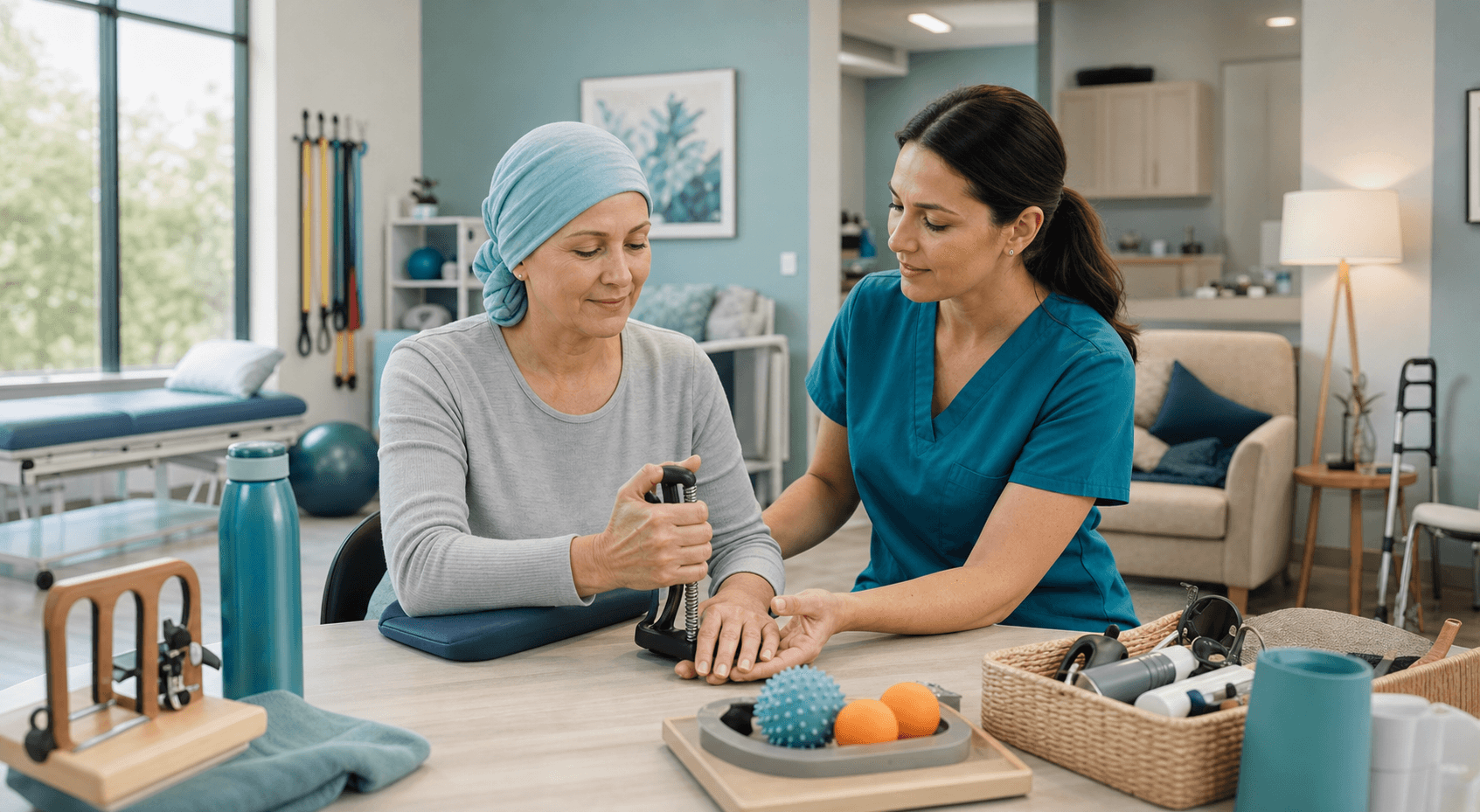
These symptoms should be discussed instead of silently tolerated. Some patients benefit from physiotherapy, occupational therapy, swallowing support, pain care, counselling, nutrition guidance, or medicine adjustment.
Symptoms to report between visits
Report new lumps, unexplained weight loss, persistent pain, bleeding, new cough, breathlessness, swallowing difficulty, neurological symptoms, severe headache, seizures, persistent fever, or any symptom that is new, worsening, and not explained.
Reporting a symptom does not mean cancer has returned. It means the team can evaluate it properly and reduce uncertainty.
Rebuilding confidence
Many survivors worry before scans or follow-up appointments. This is common. I encourage patients to write questions before the visit, bring a family member, and ask what signs need attention and what signs can be watched.
At Apex, survivorship is seen as more than test results. It includes function, nutrition, emotional health, family confidence, and safe return to normal activities wherever possible.
A note from Dr. Ankita Patel
My advice after treatment is to stay connected with your follow-up plan. You have completed an important phase, and the next phase deserves the same care and attention.