
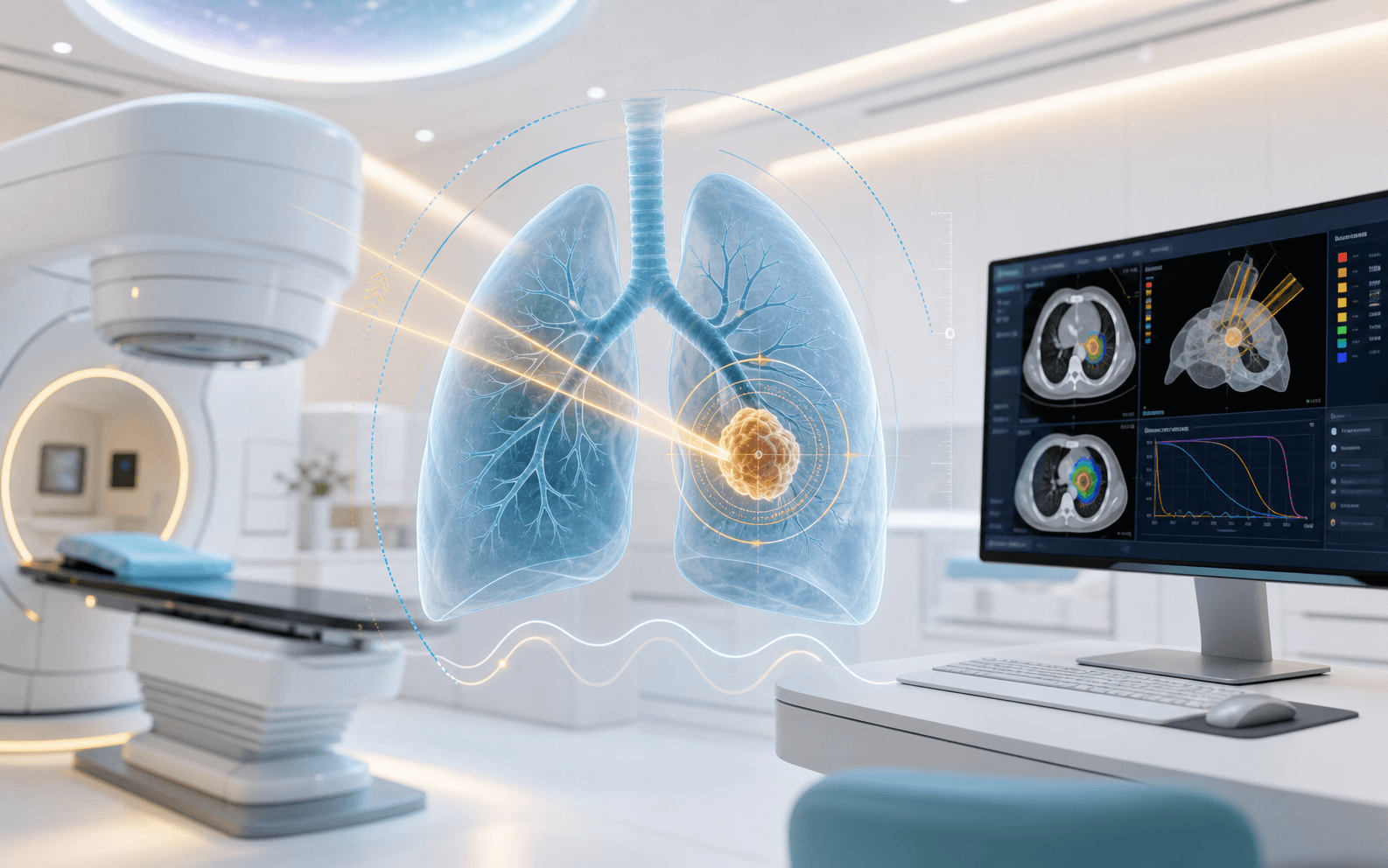
When I meet a patient for radiation therapy, the first emotion is often fear. Many families imagine radiation as something painful or uncontrolled. I explain it differently: radiation therapy is a carefully planned local treatment that uses high-energy beams to damage cancer cells in a defined area, while the team works to protect normal tissues as much as possible.
How radiation works in simple words
Radiation therapy does not usually feel like anything while the machine is on. The beam passes through the body for a few minutes and affects the DNA of cancer cells. Over time, those cells lose the ability to grow and divide.
The treatment is local. That means if radiation is planned for the breast, head and neck, lung, pelvis, brain, or another area, it is directed to that treatment region. It is not the same as a medicine that travels through the whole body.
What happens before the first session
At Apex Hospital, planning begins with reports, imaging, examination, and a discussion about the treatment intent. Some patients receive radiation after surgery to reduce the risk of local return. Some receive it with chemotherapy. Some receive it to relieve pain, bleeding, cough, pressure, or other symptoms.
A planning scan is then done in the treatment position. Small marks, masks, or supports may be used so the patient can lie in the same position every day. Behind the scenes, the radiation team outlines the tumour region and nearby organs, calculates the dose, checks the plan, and reviews safety before treatment starts.
Why modern machines and image guidance matter
Radiation is not one-size-fits-all. Techniques such as IMRT, IGRT, SBRT-style planning in selected cases, and brachytherapy for selected indications allow the dose to be shaped more carefully.
At Apex Super Speciality Hospital, the value of technology is strongest when it is paired with careful judgement. We look at the cancer type, stage, previous surgery or medicines, age, fitness, nutrition, and patient priorities before choosing the technique.
What patients usually ask me
Patients commonly ask whether radiation will make them radioactive. With external-beam radiation therapy, the patient does not become radioactive and can usually be around family members after treatment. Some internal radiation procedures have different precautions, and those are explained case by case.
Patients also ask about side effects. Side effects depend on the body part treated, the dose, and whether chemotherapy is also being given. Many effects are manageable when reported early. I encourage patients to tell us about skin changes, swallowing difficulty, bowel or urinary changes, cough, pain, fatigue, or any new symptom instead of silently tolerating it.
A note from Dr. Ankita Patel
My message to patients is simple: radiation therapy is a planned, monitored treatment. Ask your questions, bring your reports, and let the team explain the purpose of every step before you begin.