
All expertise areas

Clinical Expertise

Rehabilitation

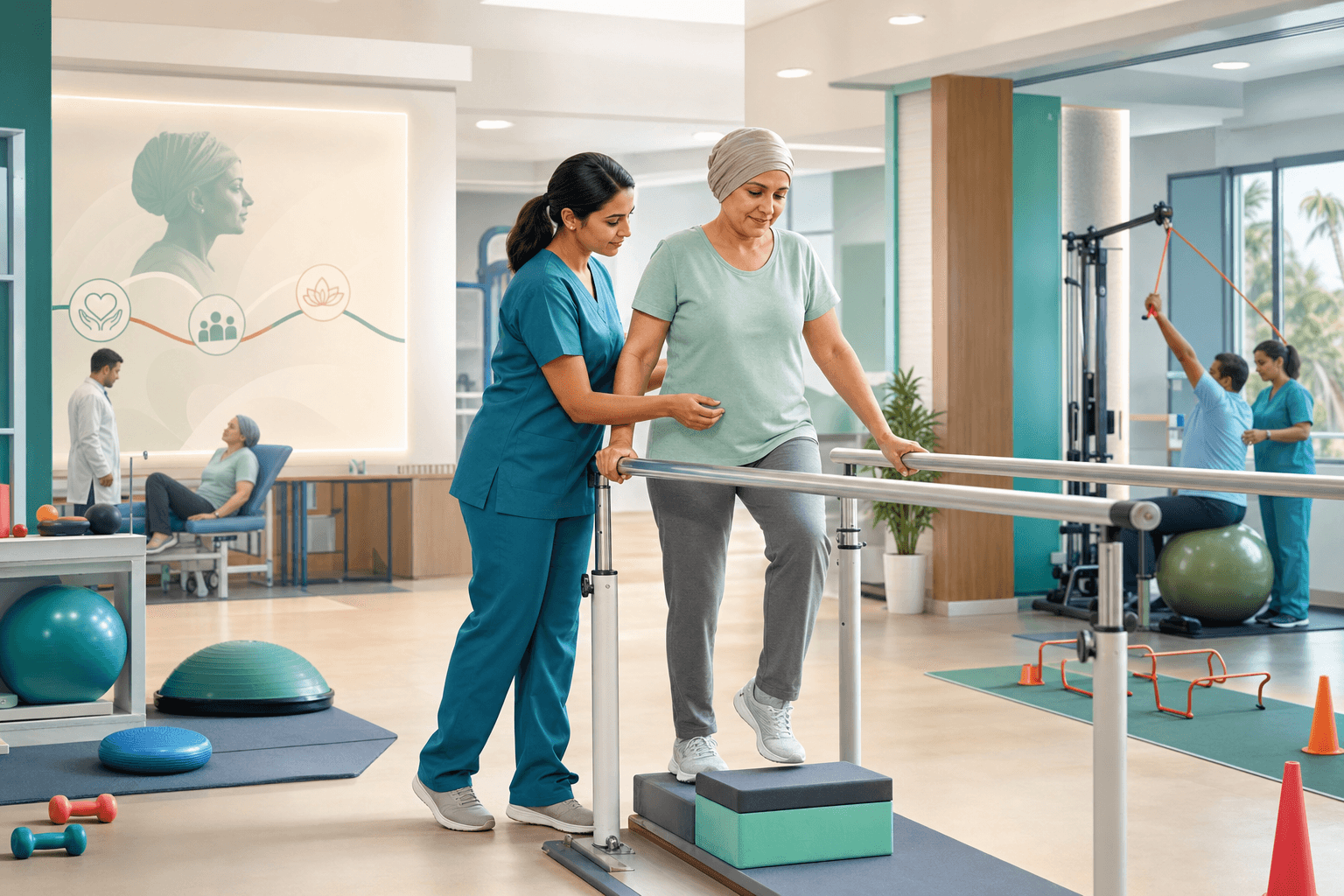
Cancer rehabilitation helps patients regain function during and after treatment, turning survival into safer movement, better energy, and more independent daily life.

AI generated cancer rehabilitation therapy illustration

Rehabilitation overview

Why rehab is part of cancer care

Cancer and its treatment can cause fatigue, weakness, pain, stiffness, swelling, neuropathy, breathlessness, swallowing difficulty, balance problems, and loss of confidence. Rehabilitation uses physiotherapy, occupational therapy, speech and swallowing support, nutrition, pain care, and counselling to improve function and quality of life.

Dr. Ankita Patel's approach

How Ankita Patel handles it

Dr. Ankita Patel treats rehabilitation as part of the oncology plan rather than an afterthought. She screens for treatment-related limitations, times rehab around surgery, chemotherapy and radiotherapy, and flags urgent problems such as spinal cord compression symptoms, severe weakness, fractures, lymphoedema, swallowing risk, or uncontrolled pain before exercise is escalated.

Care priorities

What the consultation focuses on

Prehabilitation before major treatment and rehabilitation after surgery, chemotherapy, radiation, or prolonged illness.
Fatigue, mobility, shoulder and neck stiffness, pelvic floor issues, lymphoedema risk, neuropathy, balance, swallowing, and pain-related functional loss.
Practical home exercise, safety, nutrition, return-to-work, caregiver training, and follow-up goals matched to the patient's cancer status.

Hospital Capability

The Apex oncology ecosystem behind these treatment pathways

The strength of a radiation plan depends on imaging, planning quality, daily guidance, supportive care, and team coordination. These are the core capabilities referenced across the expertise pages.

Versa HD and Elekta Synergy linear accelerators for high-precision external beam radiotherapy, including IMRT and IGRT workflows.

HDR brachytherapy support for selected gynaecological, prostate, and head and neck indications when internal radiation gives a dose advantage.

PET CT, 3T MRI, 386-slice CT, and radiotherapy planning systems that help define disease extent, organs at risk, and treatment volumes with greater clarity.

Apex Super Speciality Hospital's multidisciplinary environment, with surgical, medical, imaging, intensive care, pathology, nutrition, counselling, and rehabilitation support under one roof.

Advanced physiotherapy and occupational therapy services that support strength, mobility, daily function, and quality-of-life recovery during survivorship.

Next Step

Discuss your reports with Dr. Ankita Patel

Bring biopsy, imaging, discharge summaries, treatment records, and current medicines. The consultation is where the safest sequence, intent, and technology choice can be decided for your exact case.